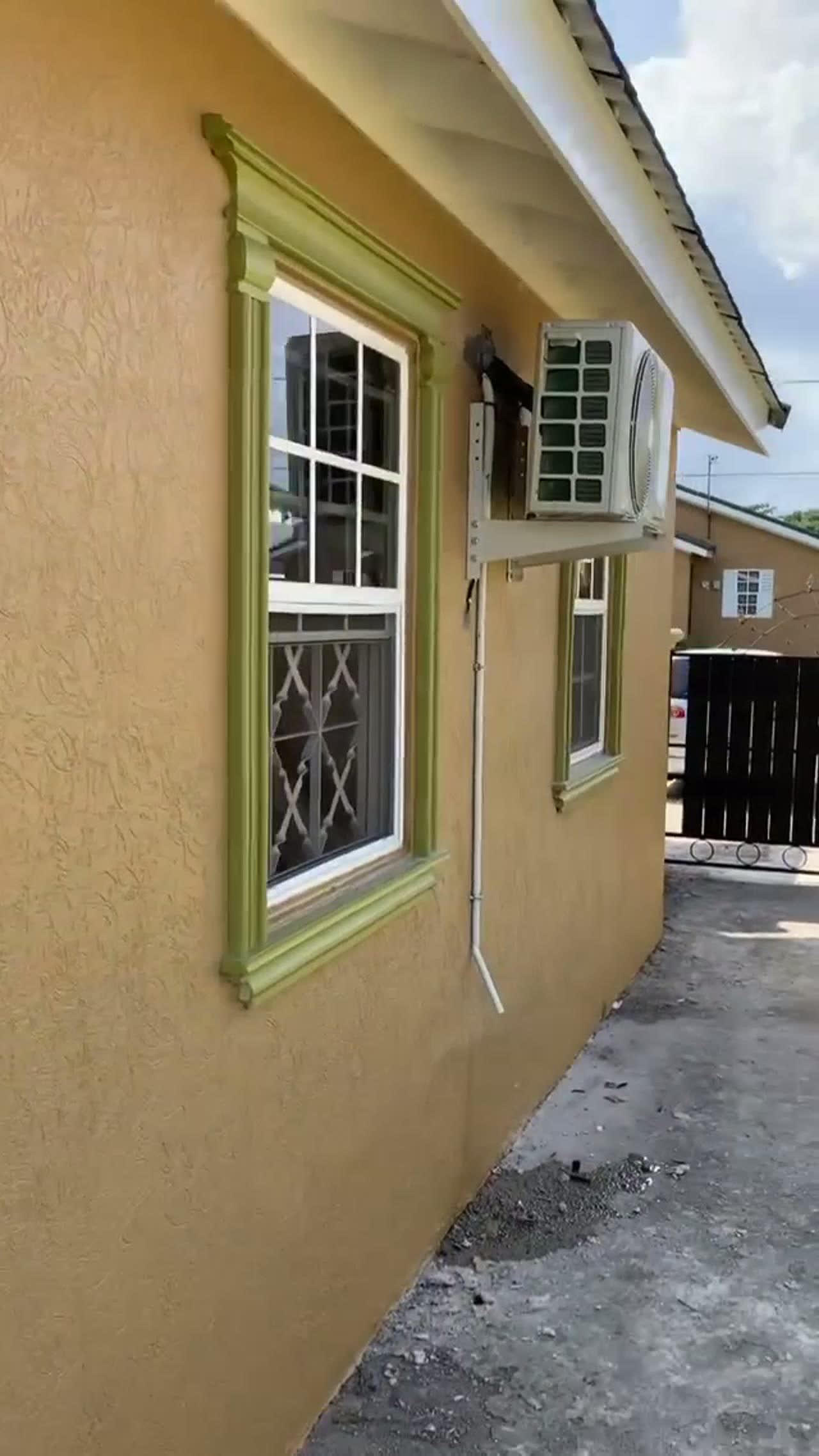
Outdoor coil cleaning in Jamaica: dust, salt, and when to call a pro
The outdoor condenser rejects heat from your home. When fins are packed with dust, cotton fluff, or salt film, the system works harder and your room comfort drops. Our service posts often show dramatic before-and-after washes on units that looked acceptable from the yard. This guide explains what you can rinse yourself and when to book our crew.
People treat the outdoor unit like a box that lives outside and takes care of itself. It does not. Every hour of cooling pushes outdoor air through those thin aluminum fins. Jamaica gives that air salt, pollen, cement dust, and grass. The coil is a filter you never meant to buy.
Why coils clog faster here
Jamaica combines high humidity, pollen, coastal salt, and road dust. Construction sites nearby add fine powder that embeds in aluminum fins. Units mounted low catch mower debris; units on roof edges catch leaves. The clog happens gradually, so you may not notice until the bill creeps or the room never feels crisp.
Cotton from nearby trees, plastic shopping bags, and dryer lint from a neighbour’s line all show up in the cage. Once that mat sits on the fins, a light breeze will not blow it off. Heat then bakes it on. That is why a unit can “suddenly” stop cooling in May when the dirt started in January.
How to tell it is dirty
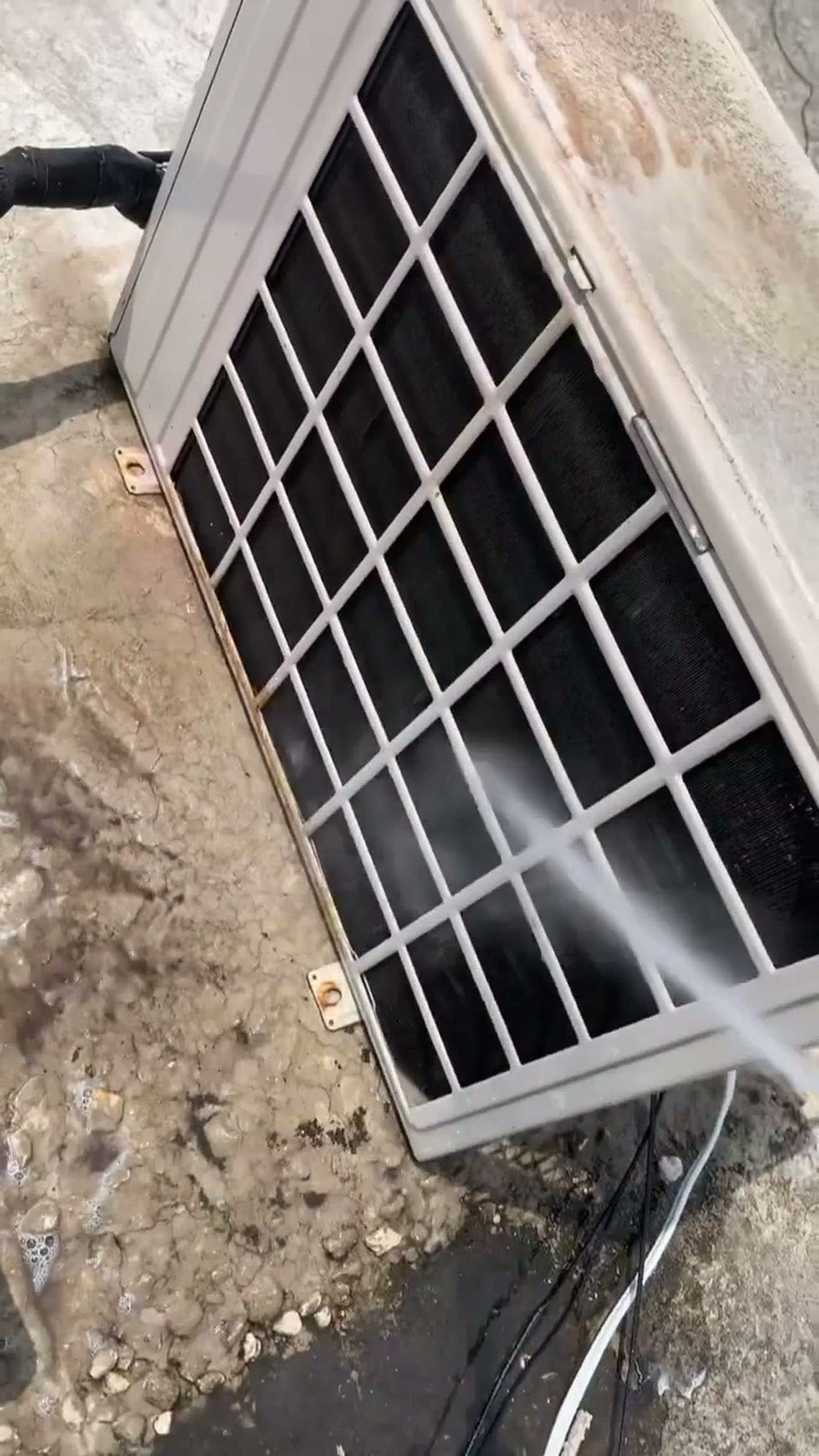
Look at the fins, not the paint. Grey or brown packing between the metal, a fuzzy layer you can pinch, or fins you cannot see through, those are dirty. A dull haze on a coastal unit can be salt even when it looks “clean.”
From inside the house, clues include longer cool-down time, a hotter outdoor discharge, and a compressor that rarely rests. Those clues also overlap with repair warning signs. A photo of the fins is how we tell dirt from a failed part before we travel.
Safe homeowner rinse
- Turn the AC off at the thermostat and disconnect power if you can do so safely.
- Remove large debris by hand (leaves, bags, grass clippings).
- Use a gentle garden hose from top to bottom, not a pressure washer.
- Keep water away from electrical boxes and connectors.
- Let the unit dry before restarting.
- Clear a path around all sides so the next wash is not a bush-cutting job.
Do not use metal tools to straighten fins unless you know what you are doing. Bent fins choke airflow worse than dirt. A plastic fin comb in careful hands is one thing. A screwdriver is how people ruin a condenser for a Saturday experiment.
What never to do
- Pressure washer, turbo nozzle, or “just a little blast.”
- Bleach, oven cleaner, or kitchen degreaser on the fins.
- Spraying a running unit.
- Bending the cage open and leaning on the fan.
- Covering the unit with a tarp while it is in season. It needs air, not a greenhouse.
If you already pressure-washed it, tell us. Folded fins change what we can recover on a service visit.
Professional coil wash
Technicians use coil-safe chemicals, fin combs, and controlled pressure to restore airflow without damaging the condenser. They can flush the drain pan, check fan amps, and catch refrigerant issues while on site. Plan at least one pro wash per year, twice near the coast. Details in the servicing schedule article.
A pro wash is not only water. Packed organic dirt and salt film need the right cleaner and a path for that dirt to leave the fins, not get driven deeper. Indoor coil work belongs on the same ticket when the indoor smell or airflow is part of the complaint. Outdoor-only is a half job when the bedroom still smells musty.
Salt air zones
Beach-side and harbor-side homes should rinse housings more often and inspect brackets for rust. Salt does not always look like white crust; sometimes it is a dull haze. If you hear the sea from the condenser, add an extra service slot to your calendar.
Brackets, bolts, and line-set insulation fail in salt air before the compressor does. Mention rust streaks and flaking paint when you book. That may be a remount conversation, not only a wash.
Plants, walls, and shade
A condenser boxed in by concrete on three sides recirculates its own hot air. Hedge it with crotons and you get the same problem plus leaves. Shade from a tree is good until the tree drops a mat on the coil every week.
If you are planning a new install, outdoor placement is half the comfort. The TCL install notes and Windy install guide both start with airflow around the outdoor unit. Cleaning cannot fix a unit that was mounted in a dead corner.
After cleaning
You should feel stronger airflow at the indoor grille within a short time if dirt was the main issue. If the room is still warm, you may have a repair issue beyond cleaning. Note whether the outdoor fan spins quietly and whether water drains normally from the indoor unit.
Give the system a fair test with the door closed and a realistic set point. An open-plan living room will still feel warm after a perfect wash. Pair cleaning with the habits in the JPS bills guide so the wash is not undone by all-day open doors.
Common questions
Can I use bleach on the coil?
No. Harsh chemicals corrode fins and void warranties. Use water or products meant for HVAC coils.
How do I book a wash with you?
WhatsApp 876-472-9471 with a photo of the outdoor unit and your parish.
Will cleaning lower my JPS bill?
It can reduce run time if the unit was struggling against dirt. Pair with good habits in the JPS bills guide.
How long does a wash take?
It depends on access, how packed the coil is, and whether indoor work is included. Tell us ladder or roof needs when you book.
The unit is on a high wall. Can you still wash it?
Yes if we can reach it safely. Send a photo of the height and what sits below the ladder.
Book an outdoor wash
Send a photo of the condenser and note when it was last serviced.
Servicing options